Explore AyurMana
Home / Ayurveda / History of Ayurveda
Chronicles of an Unbroken Tradition · 5,000 Years

The History of Ayurveda: Five Millennia of Healing Wisdom

How an ancient Vedic philosophy evolved through the golden age of classical surgery and pharmacology, survived foreign invasions and colonial suppression, and found its purest living sanctuary in Kerala.

📜 Classical Indian Medical History
· Curated from Ancient Samhitas · 10 min comprehensive chronicle · Begin Reading ↓
The Mythic & Vedic Dawn

How the Science of Life Descended to Mortals

Classical tradition holds that Ayurveda is Apaurusheya — timeless wisdom not invented by human intellect, but revealed by nature to awakened sages in deep meditation. Long before formal medical textbooks were written down, its core botanical insights were preserved in the sacred hymns of the Rigveda and Atharvaveda (circa 3000 – 1500 BCE).

The classical texts recount that as human communities shifted away from natural living, illnesses began afflicting humankind. Moved by compassion, fifty-three eminent sages gathered in the foothills of the Himalayas. They selected Sage Bharadvaja to journey and bring down the divine science of healing so that humans could fulfill life's four sacred purposes: Dharma (virtue), Artha (wealth), Kama (joy), and Moksha (spiritual liberation).

Circa 3000 BCE

The Atharvaveda Hymns

First recorded chants mentioning curative roots, fever cures, blood-stopping herbs, and microbial causes of illness (Krimi).

Vedic Lineage

The Lineage of Transmission

From Brahma to Daksha Prajapati, to the celestial physicians Ashwini Kumaras, to Indra, and finally to earthly master Bharadvaja.

This marked the transformation of Ayurveda from divine oral hymns into empirical clinical medicine on Earth.

Charaka Samhita · Sutrasthana 1.15
"Dharmartha-kama-mokshanam arogyam mulam uttamam |
Rogas tasyapahartarah sreyaso jivitasyaca ||"
"Good health is the supreme foundation for achieving virtue (Dharma), prosperity (Artha), joyful desire (Kama), and ultimate liberation (Moksha). Diseases are the thieves that steal both well-being and life itself."

This foundational verse explains why ancient Indian physicians regarded medicine not merely as a commercial trade, but as the primary guardian of all human fulfillment.

The Classical Treatises

The Brihat Trayi: The Three Great Pillar Texts

Between 1000 BCE and 600 CE, Indian medicine was codified into comprehensive medical encyclopedias known as the Brihat Trayi (The Great Triad). These masterpieces remain the gold standard of Ayurvedic diagnosis and treatment today.

Circa 800 BCE · Internal Medicine

Charaka Samhita

Sage Agnivesha & Redacted by Sage Charaka
Core Clinical Focus

Internal medicine (Kaya Chikitsa), digestive metabolic fire (Agni), cellular toxicity (Ama), and over 2,000 botanical remedies.

Charaka was an itinerant physician who walked through villages, observing that health depends on environmental harmony, mental equanimity, and gut digestion. His text includes deep treatise on psychosomatic medicine.

Circa 600 BCE · Classical Surgery

Sushruta Samhita

Sage Sushruta of Kashi (Father of Surgery)
Core Clinical Focus

Surgery (Shalya Tantra), plastic surgery, wound management, anatomy via human dissection, and 121 specialized surgical instruments.

Centuries before European surgery developed, Sushruta performed rhinoplasty (forehead flap nose reconstruction), cataract couching, kidney stone extraction, and fracture realignments with medicinal herb anesthesia.

Circa 600 CE · Poetic Synthesis

Ashtanga Hridaya

Acharya Vagbhata of Sindh
Core Clinical Focus

Harmonizing the internal medicine of Charaka with the surgical wisdom of Sushruta into 7,120 rhythmic Sanskrit verses.

Vagbhata created the most elegant, memorizable clinical textbook in history. It became the heart and soul of Kerala's medical tradition and is still memorized verse-by-verse by traditional Kerala Vaidyas today.

The Secondary Classical Triad: The Laghu Trayi

Centuries later, three subsequent masters authored specialized companion texts: Madhava Nidana (700 CE, dedicated entirely to clinical pathology and diagnosis), Sharngadhara Samhita (1300 CE, introducing pulse diagnosis Nadi Pariksha and pharmaceutical alchemy), and Bhavaprakasha (1550 CE, documenting newly introduced herbs and plants).

The University Era

Takshashila, Nalanda & Global Medical Exchange

During India's classical era, medical education was neither informal nor superstitious. It was taught in massive residential universities attracting scholars from across Asia, the Middle East, and Greece.

Northwestern Gateway · 700 BCE – 400 CE

Takshashila University

The Premier Center of Surgical Training & Clinical Internships

Located near modern Islamabad, Takshashila was renowned for its legendary 7-year medical curriculum overseen by royal physician Atreya.

  • Rigorous Entry: Only one out of three applicants passed the demanding intellectual and ethical entrance exam.
  • Practical Herbology: Students were sent into the surrounding forests for miles with instructions to find a single plant that lacked medicinal value; only those who recognized that *every* plant has therapeutic properties passed.
  • Famed Alumni: The royal physician Jivaka, personal doctor to Gautama Buddha, celebrated for performing brain trepanning and bowel surgeries.
Eastern Seat of Knowledge · 400 CE – 1193 CE

Nalanda Mahavihara

Home to Over 10,000 Monastic Scholars & Medical Libraries

In ancient Magadha (modern Bihar), Nalanda housed the largest medical and philosophical library in the ancient world, known as Dharmaganja (the Treasury of Truth).

  • Free Medical Care: Associated charity hospitals provided free herbal medicines and inpatient beds to all surrounding populations.
  • International Scholars: Chinese pilgrims Xuanzang and Yijing documented how scholars from Korea, Japan, Tibet, and Persia studied Ayurvedic pulse diagnosis and botanical processing.
  • Tibetan Synthesis: Nalanda masters translated Ayurvedic texts into Tibetan, forming the core of Sowa Rigpa (Tibetan Medicine) that lives on today.

How Ayurveda Shaped World Medicine

During the 8th century Golden Age of Baghdad, Caliph Harun al-Rashid commissioned chief royal physician Mankha of India to translate the Charaka Samhita and Sushruta Samhita into Arabic under the titles Kitab al-Sumum and Kitab-i-Susrud. These translations directly influenced Persian luminaries Avicenna (Ibn Sina) and Rhazes, weaving Indian botanical knowledge into medieval European pharmacopeias.

Arabic: Kitab-i-Susrud Tibetan: Gyushi / Sowa Rigpa Greek: Humoral Parallels Silk Route Herb Trade
The Colonial Disruption

The Dark Century: Suppression & Underground Survival

With the sacking of Nalanda's nine-story libraries in 1193 CE, centuries of written anatomical and pharmaceutical commentaries were lost to flames. However, the most calculated assault on traditional medicine occurred during British colonial rule in the 19th century.

Determined to replace indigenous knowledge with European systems, British authorities systematically delegitimized traditional Vaidyas and cut off public funding to Ayurvedic institutions.

Lord Macaulay’s Minute on Education (1835)

"We must at present do our best to form a class who may be interpreters between us and the millions whom we govern... By 1835, the British administration abolished government support for native medical colleges, banned traditional surgery, and declared Ayurvedic practice primitive."

How Ayurveda Survived: The Living Lineages

While urban institutions closed and Western allopathic hospitals were built for colonial elites, Ayurveda refused to die. In rural villages, forests, and remote southern valleys, families of Vaidyas carried the tradition forward underground.

Generations of physicians hid sacred palm-leaf manuscripts inside carved teak wood chests (Pettakam) to protect them from tropical moisture and colonial confiscation. Grandfathers taught grandchildren pulse diagnosis in the quiet of dusk, brewing medicated oils in secret domestic apothecaries.

The tradition survived not on paper in state archives, but in the living hands and memories of dedicated families.
The World Capital of Authentic Ayurveda

Why Kerala Became the Living Sanctuary of Healing

While northern medical systems were disrupted by successive political upheavals, the lush southern coastal state of Kerala enjoyed relative peace, a tropical climate blessed by two monsoons, and rich volcanic rainforests.

Lush Kerala nature and backwaters
Kerala's Western Ghats: Biodiversity hotspot sheltering over 900 endemic medicinal plants

The Ashtavaidya Tradition: The Eight Families

In medieval Kerala, royal monarchs granted hereditary estates to eighteen aristocratic Brahmin families known as the Ashtavaidyas (masters of all eight classical branches of medicine).

Unlike other regions where surgery and physical therapies had waned, Kerala Vaidyas refined and perfected the physical practice of Panchakarma, inventing world-famous rejuvenation therapies that are practiced nowhere else with such mastery:

Unique Kerala Classical Innovations

• Shirodhara: Continuous rhythmic flow of warm herbalized sesame oil over the forehead.
• Pizhichil: The "Royal Oil Bath" where therapists pour liters of warm medicated oil while synchronizing deep tissue massage.
• Navara Kizhi: Warm boluses of medicated Navara rice boiled in cow's milk and herbal decoctions to rebuild wasted muscle tissue.

Milestones of 5,000 Years

Chronology: From Vedic Chants to Modern Hospital Sanctuary

An unbroken arc of scientific observation, empirical trial, clinical documentation, and resilient revival.

3000 – 1500 BCE

The Vedic Foundations (Atharvaveda)

Hymns describing the sacred relationship between humans, botanical herbs, microbial infection, and cosmic rhythms. Oral transmission ensures pristine memorization across generations.

1000 – 600 BCE

Codification of Charaka & Sushruta Samhitas

Transition from poetic myth to rigorous empirical science. Agnivesha and Charaka record internal medicine; Sushruta establishes surgical rhinoplasty, cataract surgery, and cadaveric dissection in Kashi.

500 BCE – 400 CE

The University Era: Takshashila & Jivaka

Students undergo 7-year residential clinical apprenticeships. Royal physician Jivaka treats Lord Buddha and performs revolutionary abdominal and cranial procedures.

600 CE

Acharya Vagbhata Composes the Ashtanga Hridaya

The definitive poetic synthesis uniting Charaka's internal medicine and Sushruta's surgical precision into 7,120 verses. It becomes the foundational clinical manual of Kerala's medical lineages.

800 – 1100 CE

The Golden Age of Translation (Baghdad & Tibet)

Ayurvedic treatises are translated into Arabic in the Abbasid court of Baghdad and into Tibetan at Nalanda, deeply shaping Islamic Unani-Tibb and Tibetan Sowa Rigpa traditions.

1300 – 1800 CE

The Rise of Kerala’s Ashtavaidya Families & Dharma Lineage

Royal patronage protects Kerala Vaidyas. The Dharma Ayurveda physician lineage begins in southern Kerala, compounding fresh herbal formulas and establishing multi-generational clinical archives.

1835 – 1947 CE

British Suppression & Domestic Underground Resistance

The British administration bans traditional medical schools. Vaidyas safeguard palm-leaf texts in wooden chests, continuing quiet family-based clinical care across rural India.

2000 – Present

Global Scientific Revival & AyurMana Hospital Sanctuary

Modern science validates active phytochemicals in Ashwagandha, Turmeric, and Brahmi. Dr. Jayaprakash and the 9th generation Dharma Ayurveda family welcome global patients to AyurMana Hospital in Kerala.

The Living Tradition · 9 Generations

History is Not a Museum at Dharma Ayurveda. It is Practiced Every Morning.

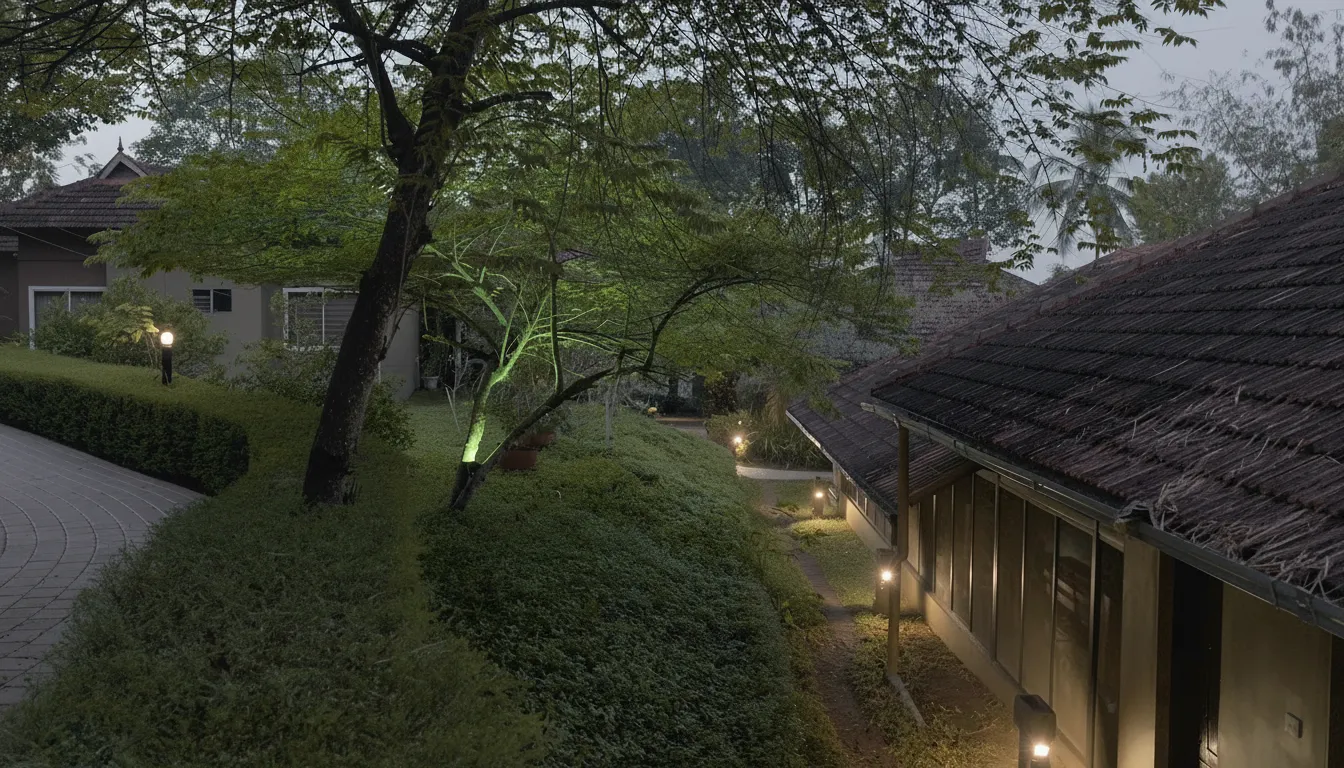
When you walk into AyurMana, our residential hospital sanctuary in Thiruvananthapuram, you are not stepping into modern corporate healthcare. You are entering an unbroken continuum of Kerala healing where classical recipes are still brewed fresh in copper vessels over wood fires.
✓ Direct 9-generation Vaidya lineage led by Dr. Jayaprakash.
✓ Authentic Panchakarma detox protocols administered exactly as documented in the Ashtanga Hridaya.
✓ Healing chronic arthritis, neurological disorders, metabolic illness, and stress exhaustion.
AyurMana Ayurveda Hospital Campus in Thiruvananthapuram, Kerala
AyurMana Residential Healing Sanctuary · Thiruvananthapuram, Kerala
16th century Kerala palm leaf manuscript
Palm Manuscripts
Ashwagandha herb
Ashwagandha
Brahmi plant
Brahmi Plant
Guggulu resin
Guggulu Resin
Haritaki fruit
Haritaki Fruit
Tulsi plant
Sacred Tulsi
Historical Clarifications

Frequently Asked Questions on Ayurvedic History

Separating genuine historical documentation from myth. Here are authentic answers about ancient surgeries, manuscript preservation, and medical evolution.

Curious about our lineage?

Learn how the Dharma Ayurveda family preserves classical Kerala pharmacology across nine generations.

About AyurMana Heritage →
Did Sage Sushruta really perform plastic surgery 2,500 years ago?

Yes. The Sushruta Samhita explicitly documents the technique of rhinoplasty (pedicle flap reconstruction using skin from the cheek or forehead) to reconstruct noses amputated as criminal punishments in ancient India. In 1794, British surgeons in India witnessed a traditional potter-surgeon perform this exact procedure on a bullock-cart driver named Cowasjee, published the report in London’s Gentleman's Magazine, and adapted it into modern Western reconstructive plastic surgery.

How did palm-leaf manuscripts survive in Kerala’s humid climate?

Kerala manuscripts were inscribed using a sharp iron stylus (Narayam) onto specially treated dried leaves of the Palmyra palm (Borassus flabellifer) or Talipot palm. After incising the text, the leaves were rubbed with a mixture of fine lampblack soot and natural lemongrass oil (Cymbopogon flexuosus), which blackened the letters for legibility while acting as a natural antifungal and insect-repellent preservative. Vaidyas regularly recopied fragile scrolls every few generations to keep texts alive.

What is the difference between classical Ayurveda and village folk remedies?

Folk medicine (Loka Parampara) consists of informal household tips and regional culinary herbs passed orally without formal diagnostic theory. In contrast, classical Ayurveda (Shastriya Ayurveda) is a comprehensive, institutionalized medical science codified in Sanskrit treatises, complete with systematic etiology (Nidana), pathology (Samprapti), constitutional typing (Prakriti), and multi-stage pharmacology.

Why is Kerala specifically regarded as the world center of Panchakarma?

While northern regions suffered heavy destruction of medical schools during foreign invasions, Kerala’s geography and royal patronage allowed traditional physician families (the Ashtavaidyas) to preserve the hands-on clinical techniques of Panchakarma uninterrupted. Furthermore, Kerala’s equatorial tropical climate and high humidity open the body’s skin pores and sweat channels (Sweda srotas), making it the biologically ideal environment for oil therapies.

How does modern medicine view Ayurveda today?

Today, modern science increasingly investigates and validates Ayurvedic concepts. Phytochemical research has isolated therapeutic molecules like withanolides from Ashwagandha for stress regulation, curcumin from turmeric for systemic inflammation, and guggulsterones for cholesterol management. The World Health Organization (WHO) established its Global Centre for Traditional Medicine in India, acknowledging Ayurveda's vital role in integrative preventative care.